By August, the rhythm of summer settles into the canyon country around Falcon’s Ledge Lodge. Warm afternoons bring grasshoppers to life along the banks, trout begin watching the edges with purpose, and anglers get the chance to fish one of the most exciting dry-fly games of the season: hopper fishing. For many guests, this is the moment they imagine when they think of western fly fishing—walking a clear mountain stream, casting a buoyant terrestrial pattern tight to the bank, and watching a trout rise with confidence.
Late summer is when terrestrial insects become an important part of a trout’s diet. Grasshoppers, ants, beetles, and other bank-side insects are active in the heat, and wind often pushes them into the water. Trout quickly learn that a big splash near the bank can mean a high-calorie meal. Around Falcon’s Ledge, August and September are especially good months for fishing larger dry flies on the rivers and streams of eastern Utah.
That makes August a perfect month for anglers who enjoy visual fishing. Instead of staring at an indicator all day, you can work a foam or parachute hopper through likely water and watch the take happen on the surface. Even when fish are selective, the hopper still serves as an excellent searching pattern and can bring trout up from deeper pockets, undercut banks, riffles, and shaded seams.
One of the most productive ways to fish in August is with a hopper-dropper rig. The setup is simple: tie on a buoyant hopper pattern, then attach two to three feet of tippet from the bend of the hook to a small nymph below. The hopper acts both as an attractor and as a natural strike indicator, while the dropper covers fish that are feeding below the surface.
This rig shines on the varied water near Falcon’s Ledge because it lets anglers cover multiple feeding zones at once. A trout tucked under a grassy bank may crush the hopper, while another fish holding in a deeper slot may take the nymph. Adjust the dropper length to match the depth of the water, shorten it in riffles and skinny pocket water, and lengthen it when fishing deeper runs or bends.
Several late-summer patterns consistently earn a place in the fly box at Falcon’s Ledge. Parachute hoppers are simple, visible, and effective. The Parachute Madam X, often called the PMX, is another excellent choice because it floats well and suggests a variety of large insects. Chubby-style patterns are also useful when you need extra buoyancy for a dropper rig or when the water has more texture.
For droppers, late-summer staples include lightning bugs, rainbow warriors, Spanish bullet perdigons, soft-hackle pheasant tails, and rubber-legged copper johns. Olive and royal tones are often productive for dries, while smaller, fast-sinking nymphs help reach fish in deeper pockets. The best choice can change by river, water level, and light conditions, which is where a knowledgeable local guide can make all the difference.
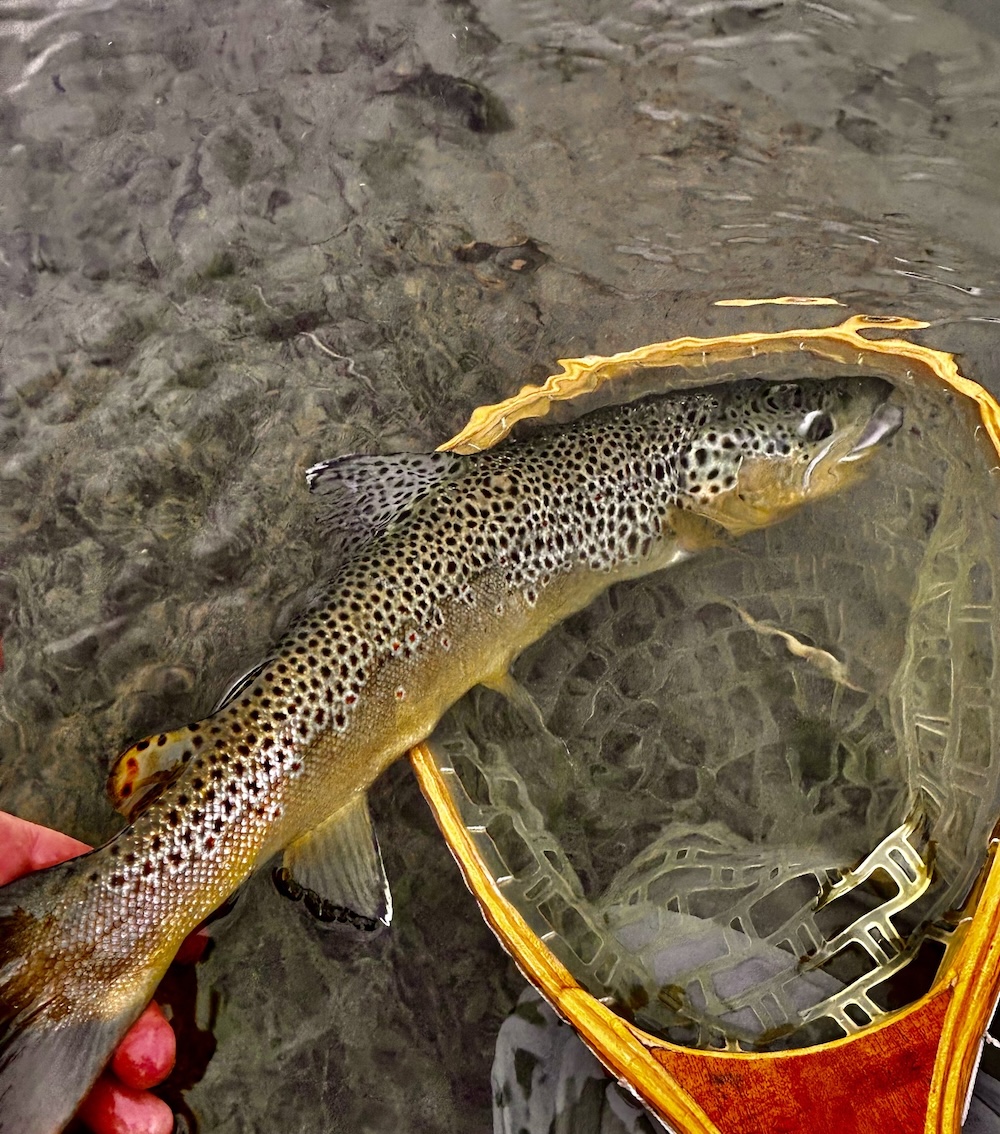
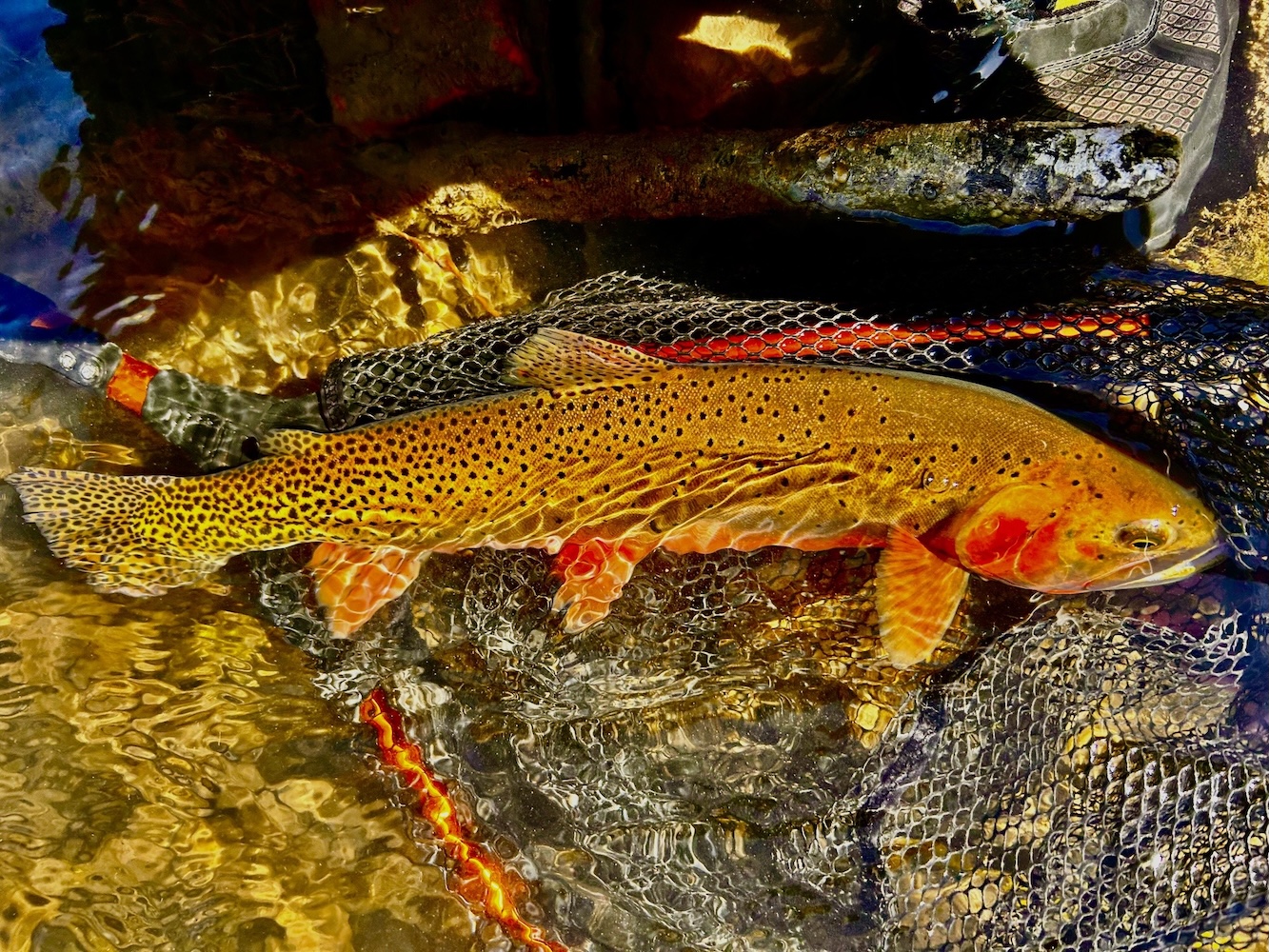
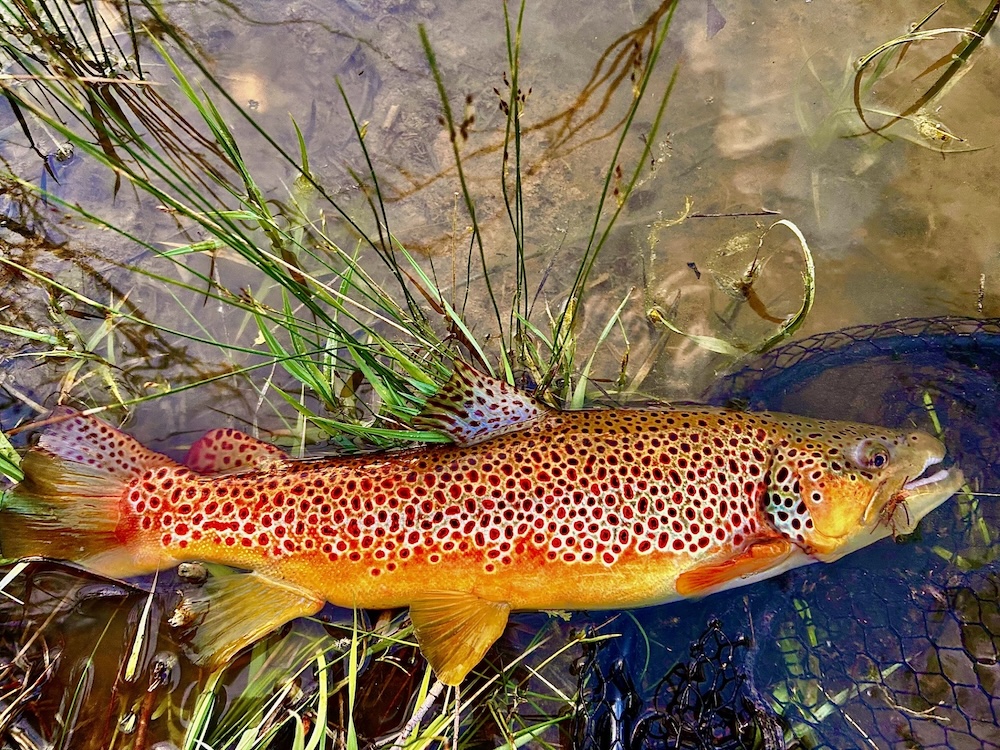
Falcon’s Ledge Lodge sits in eastern Utah near a remarkable range of trout water. Guests fish mountain freestone streams, tailwaters, and private stillwaters, with opportunities for rainbow, brown, brook, cutthroat, and tiger trout. Home waters associated with the lodge include rivers such as Rock Creek, the Duchesne, Lake Fork, Strawberry, Uintah, Whiterocks, and Yellowstone, each offering a different style of fishing and scenery.
That variety is part of what makes an August trip so rewarding. One day might be spent walking a cold, clear mountain stream and casting hoppers into pocket water. Another might focus on technical presentations on a tailwater or searching shaded banks where bigger trout wait for terrestrials to drift by. After the fishing day ends, the lodge setting, meals, and quiet canyon atmosphere complete the experience.
Tips for Better Hopper Fishing
- Fish the banks first. Hoppers often enter the water from grassy edges, so accurate casts close to cover can produce explosive takes.
- Let the fly land naturally. A slight plop can attract attention, but avoid repeated heavy casts that spook fish in low, clear water.
- Vary the drift. Dead-drift the hopper through seams, then try subtle twitches when fish are looking up but hesitant.
- Watch the hopper carefully. If it pauses, dips, or disappears, set the hook—your dropper may have been eaten.
- Match the water. Use larger, more buoyant dries in faster runs and smaller, lower-profile patterns in slow, clear pools.
If you love dry-fly fishing, August is one of the most memorable times to visit Falcon’s Ledge Lodge. Hopper season brings together warm weather, active trout, beautiful streams, and the kind of surface eats that keep anglers talking long after the trip is over. Whether you are new to fly fishing or looking to fine-tune your terrestrial game, a guided late-summer trip offers the right mix of instruction, access, and adventure.
Pack a box of hoppers, a handful of reliable droppers, and your favorite 5-weight rod. Then come ready for clear water, wild trout, and the simple thrill of watching a big dry fly vanish in the August light.